
Before Final Payment, What Should a Buyer Verify on a Folding Camping Chair Order?
A buyer-focused checklist for the product, specifications, packing and evidence that matter before release.
Final payment is not only an administrative step.
A folding camping chair order can look finished long before it is truly ready to release. The chairs may be packed, the supplier may send photos and the shipping date may be close. Before final payment and shipment, a buyer still has an important opportunity to compare what was agreed with what will actually be delivered.
The useful question is not whether it is possible to inspect every detail. It is which agreed details would be hardest or most expensive to correct once the shipment has left.
For a folding camping chair order, four areas usually deserve priority: the agreed chair configuration, critical specifications, basic function and visible workmanship, and the packaging and labeling that will reach the buyer’s warehouse. This is practical release guidance—not a universal inspection checklist, safety certification or replacement for laboratory testing and destination-market compliance work.
Start with the record you are verifying against.
An inspection only becomes useful when there is something clear to inspect against. That record may include an approved product specification, a confirmed quotation revision, an approved sample, agreed product photos or a combination of these. The buyer and supplier should be referring to the same version of the product.
A buyer cannot meaningfully verify “the correct chair” if the correct chair was never defined clearly enough.
- Chair model and color
- Included accessories such as carry bag, cup holder, strap or label
- Required packing quantity
- Critical dimensions and how they are measured
- Agreed fabric, frame or component description
- Approved sample or specification revision
| Point to clarify | Why it helps |
|---|---|
| Intended chair configuration | Confirms the model, color, accessories and visible setup. |
| Critical specifications | Verifies the few measurements, materials and weights that affect the decision. |
| Function and workmanship | Records agreed observations without overstating what they prove. |
| Shipment-facing details | Checks bags, labels, cartons, marks and packing quantity. |
Verify product identity and configuration first.
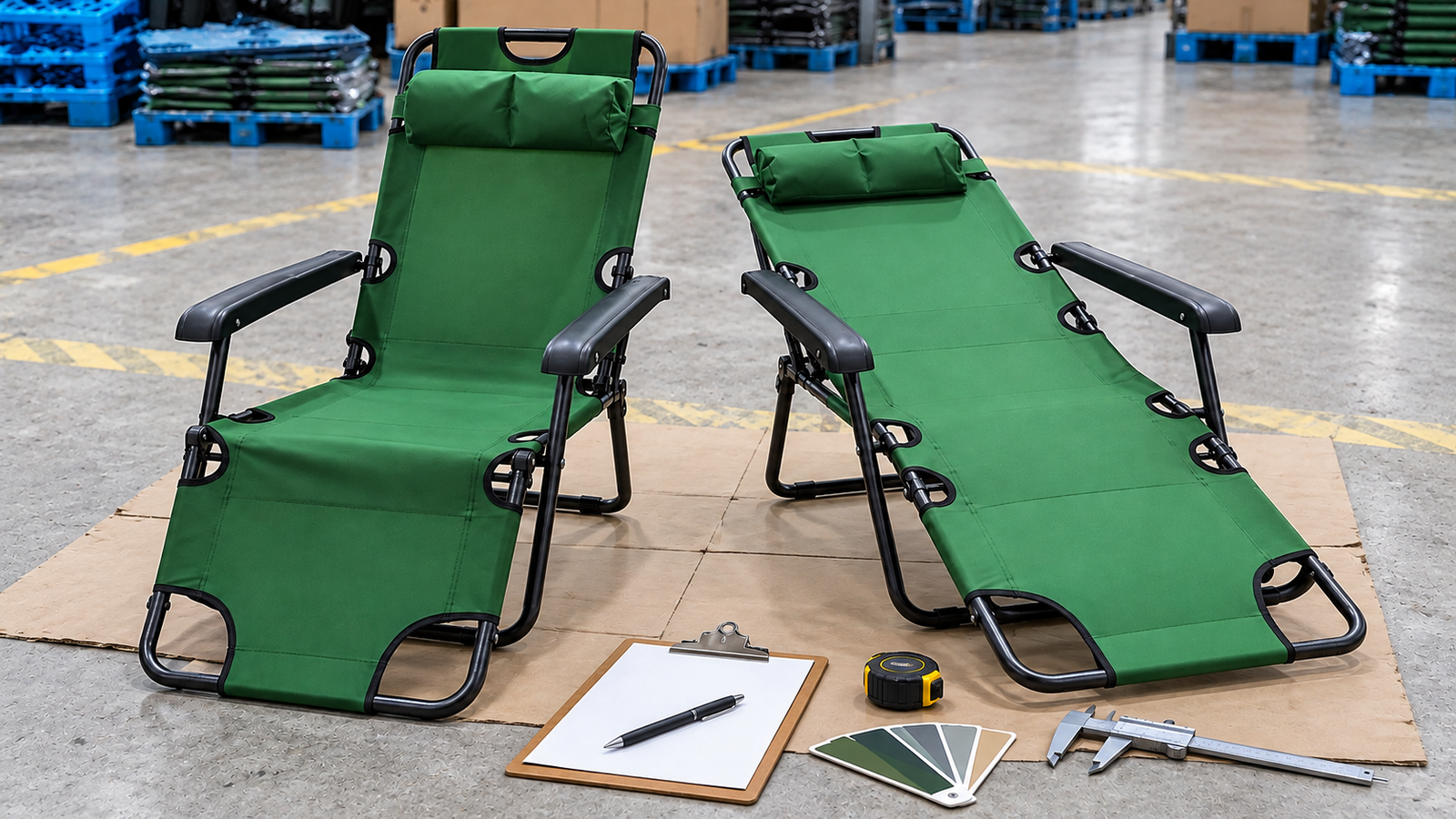
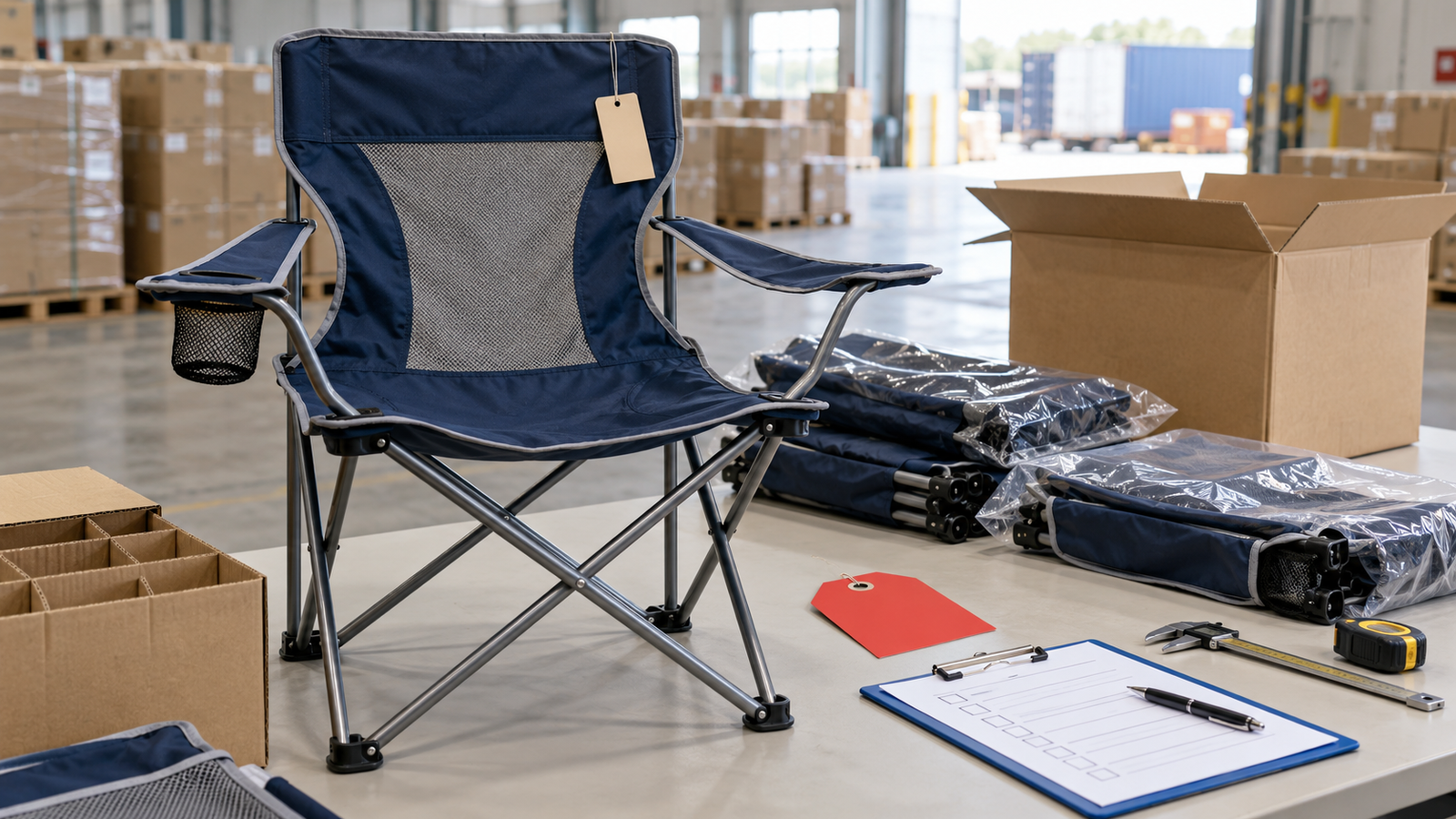
Before checking individual measurements, confirm that the chairs being packed are the intended product. This may include the correct model or product version, agreed color combination, frame and visible component layout, included armrests, cup holders, carry bags or straps, frame finish and product reference used during the check.
A chair may be close in appearance while still having a different accessory, component, fabric treatment or packing arrangement from the approved version. A visual comparison can confirm visible configuration, but it cannot by itself prove load capacity, durability, corrosion resistance or regulatory compliance.
Verify the few specifications that change the buying decision.
Not every specification deserves equal attention. The most useful checks are the ones that would change the buyer’s commercial decision if they were different. Depending on the agreed order, these may include dimensions, seat height, product weight, frame and fabric descriptions, packing quantity, carton dimensions, gross weight and shipping marks.
“50 × 50 × 80 cm” is not enough if the quotation does not explain whether those numbers refer to overall width, depth, height, seat height, folded size or another measurement point. “Steel frame” or “Oxford fabric” may also need a more specific description for the intended order.
- Overall dimensions and measurement basis
- Seat height where positioning or user experience matters
- Product weight where portability or freight cost matters
- Agreed frame and fabric descriptions
- Packing quantity per carton
- Carton dimensions, gross weight and shipping marks
Check basic function and visible workmanship.
A finished-goods check can cover opening and folding, whether the frame opens as intended, missing or loose components, stitching and fabric attachment, joints, rivets, feet, frame finish, visible marks and agreed accessories.
These checks focus on observable finished-product details, but they have a boundary. A chair that opens and folds correctly during a site check has not automatically passed a durability test. A chair that looks stable has not automatically been certified for a stated load. A visual or functional observation should not become a claim that the product is safe, durable or compliant without the relevant evidence.
Inspect what will actually arrive at the warehouse.
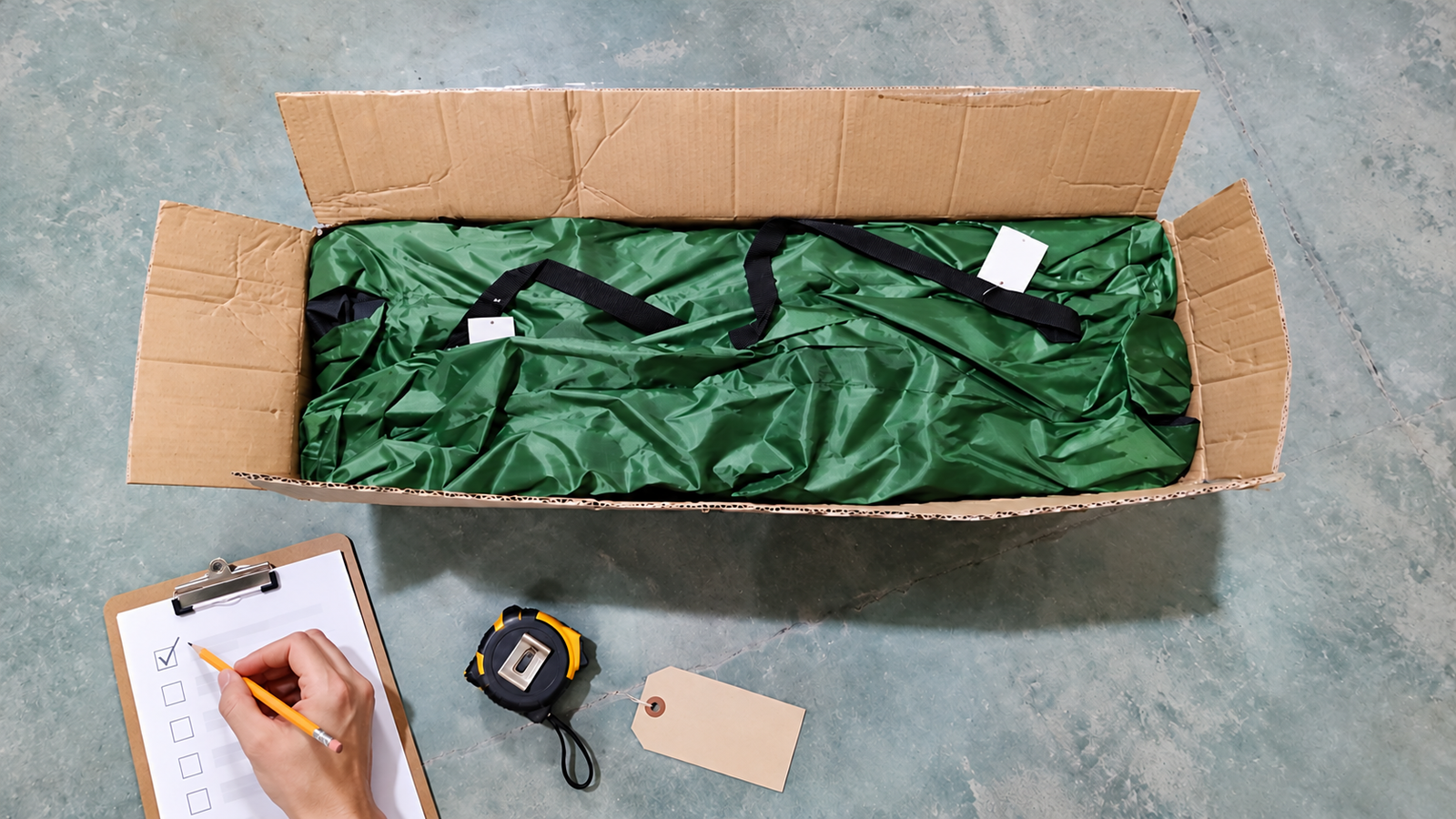
The buyer is receiving a commercial shipment—not only an open chair on a factory floor. Carry bags, labels, inner packing, export cartons, carton marks and quantities affect warehouse handling, retail presentation, freight planning and the customer’s first impression.
A chair can look correct when opened for inspection but still arrive in the wrong carton, with a missing bag, an incorrect label or a packing quantity that changes the logistics plan.
- Carry bags and unit packaging
- Hangtags, barcodes, labels and warnings where agreed
- Inner packing and export cartons
- Quantity per carton
- Carton dimensions and gross/net weight
- Shipping marks and destination information
A passed inspection does not prove every unit is correct.
Pre-shipment inspection commonly uses a sample of finished goods rather than checking every unit. A sample-based result does not mean every unit was inspected, guarantee zero defects or replace accredited laboratory testing, product certification or market-specific compliance work.
It may also be too late to solve a systemic issue involving material substitution, process changes or product design. Where those risks are significant, earlier controls such as pre-production approval or during-production checks may be needed. The appropriate level of control depends on product, supplier history, order value, destination, buyer requirements and the cost of failure.
The practical priority before final payment.
Before final payment, prioritize the agreed details that become difficult to correct once goods leave the factory. A pre-shipment check cannot remove every risk, but it can prevent a buyer from releasing payment based on assumptions that were still possible to verify. The next question is how to decide which defects are serious enough to stop shipment—that is a separate decision deserving its own discussion.
| Priority | What to verify |
|---|---|
| 1. Intended chair configuration | Correct model, color, accessories and visible component setup |
| 2. Critical specifications | Measurements, material descriptions, weights and packing details that affect the buying decision |
| 3. Basic function and workmanship | Agreed functional checks and visible construction details without overstating what they prove |
| 4. Shipment actually delivered | Bags, labels, cartons, packing quantity, shipping marks and other commercial details |
Sources and limits.
This article provides general buyer guidance. It does not establish PATU’s internal inspection practices, provide legal or regulatory advice or replace product-specific testing and compliance requirements.
- ISO 2859-1:2026 — Sampling procedures for inspection by attributes
- ISO 2859-4:2020 — Procedures for assessment of declared quality levels
- Intertek — Furniture Inspection Services
- QIMA — Pre-Shipment Inspection
Keep reading
Related Resources
Need a clearer comparison for your buying program?
Share the product, use case or quotation detail you are working with.