
An Approved Sample Is Not Yet a Production Standard
Four practical controls to define after sample approval and before bulk production and shipment.
An approved sample is not yet a production standard.
An approved folding camping chair sample is not enough to control bulk production on its own. Before production begins, buyers should freeze the product identity, critical specifications, commercial configuration and written change-control process. Otherwise, “same as sample” can become a matter of interpretation after the goods have already shipped.
In one anonymized buyer account, two pre-production samples felt stable and comfortable, matched the requested dimensions and passed a stated static load test. One sample was sealed as the receiving reference. After the deposit was paid and the bulk order shipped, the fabric felt thinner and the dimensions were short of the requested size.
The supplier explained that raw-material costs had increased and a substitute fabric was used to maintain the agreed price. The buyer had never approved that substitution. The dispute was difficult because the contract had not clearly defined fabric-weight tolerance, dimensional tolerance or a rule requiring written approval before a material change.
The lesson is not that every supplier will make an unauthorized change. It is that a sealed sample alone does not make the acceptance criteria clear enough.
A sealed sample is a reference—not a complete control system.
Keeping a sealed sample is still good practice. It gives both buyer and supplier a physical reference for appearance, comfort, construction, color and overall configuration.
But a sample is not enough when important details exist only in someone’s memory. “Same as sample” sounds precise until the buyer asks which fabric specification must match, where dimensions should be measured, what variation is acceptable, whether an accessory, carton or component can change without approval, and what happens if a substitute material is proposed.
If those questions have no agreed answer, a sealed sample can become evidence of a disagreement rather than a tool for preventing one.
| Point to clarify | Why it helps |
|---|---|
| Product identity | Names the model, revision and approved configuration. |
| Critical specifications | Defines measurable details and acceptable tolerances. |
| Commercial configuration | Includes accessories, branding, labels and packing. |
| Change-control process | Requires written review before a substitution or revision. |
What buyers should freeze after sample approval.
For a folding camping chair, a practical production reference usually needs four parts. The purpose is not unnecessary paperwork; it is to make the details that affect the buyer’s decision visible before the goods are on the water.
| What to freeze | What it should clarify |
|---|---|
| Product identity | Exact model, revision, approved color, images and configuration |
| Critical specifications | Dimensions, materials, construction details, functions and claim definitions that matter |
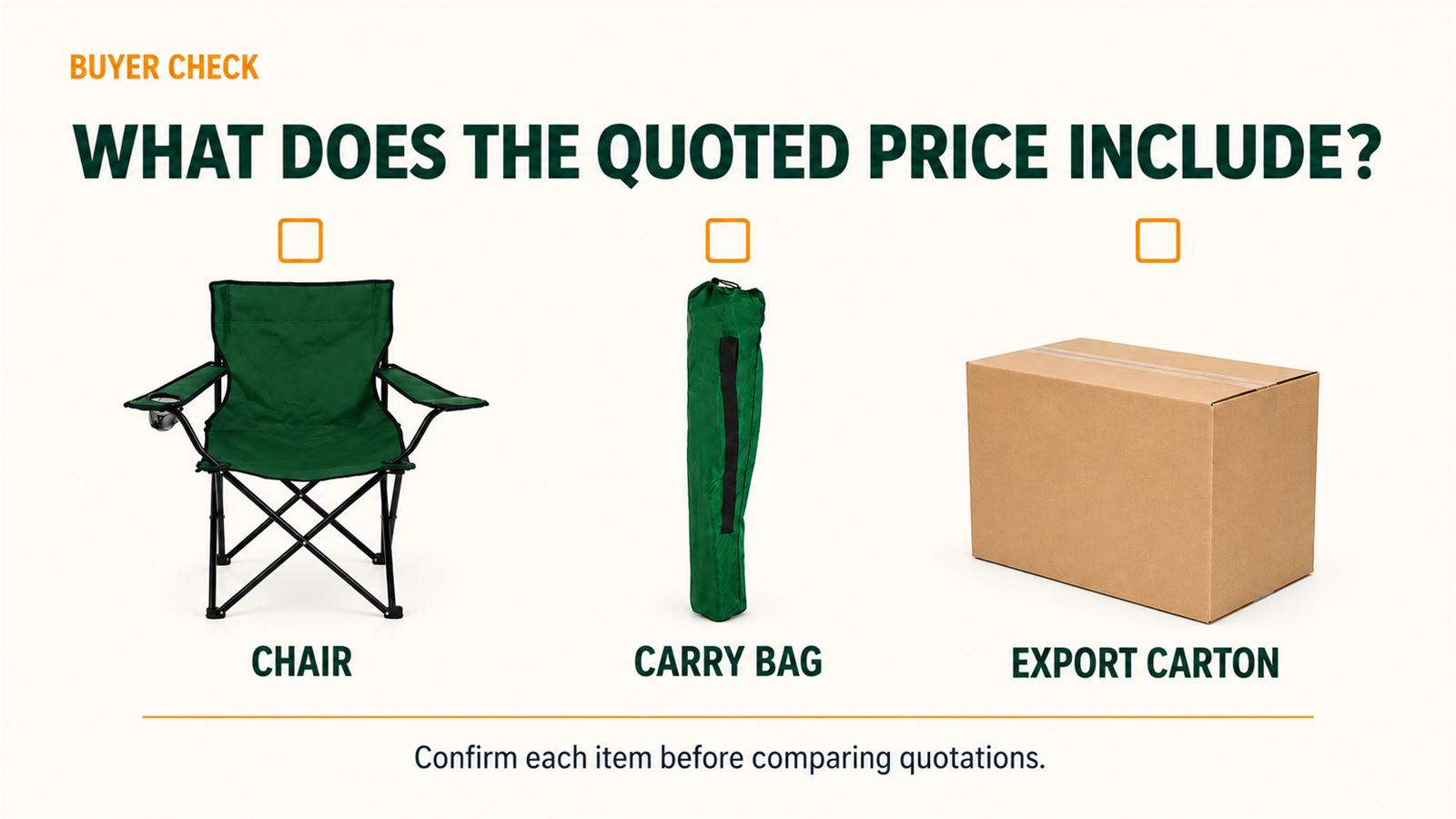
| Commercial configuration | Accessories, carry bag, labels, export carton, packing quantity and carton marks |
| Change and verification plan | Which changes require written approval and what evidence must be checked before shipment |
1. Turn important specifications into checkable requirements.
Not every product detail needs the same level of control. The important question is: if this detail changed in bulk production, would it change the buyer’s decision?
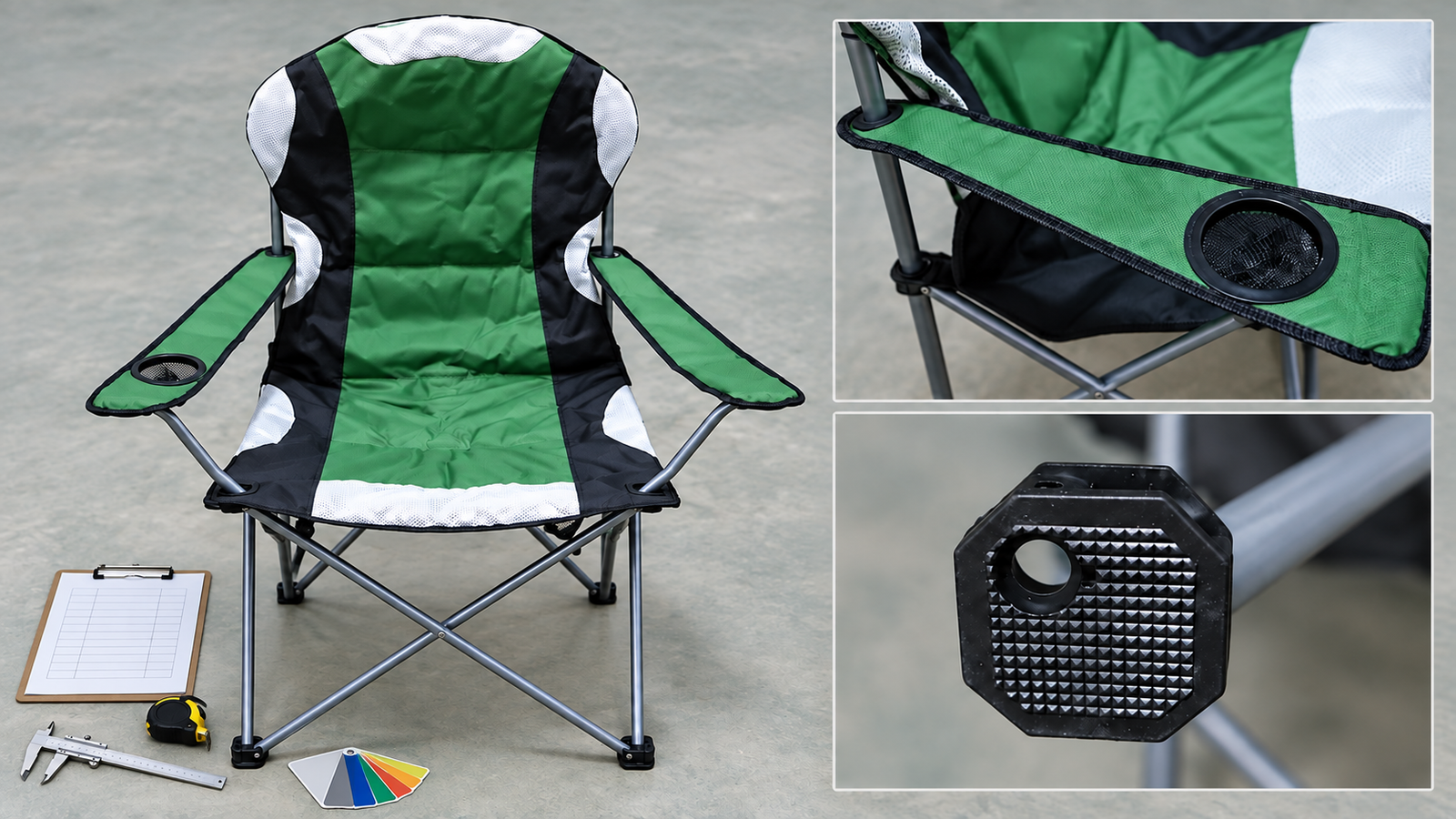
For one folding camping chair, the answer may include unfolded dimensions, seat height, frame material, tube specification, fabric construction, carry bag, carton dimensions or a stated maximum-load definition. For another chair, it may include reinforced seat corners, armrest construction, a cup holder, foot design or how easily the chair returns to its carry bag.
“High-quality fabric,” “strong frame” and “same as sample” are not measurable requirements. A requirement becomes useful when it can be checked against an agreed description, measurement method, photograph, drawing, material reference or test method.
In the buyer’s case, “waterproof fabric” was not enough. The replacement fabric may have had a waterproof coating, but it did not deliver the same material feel or perceived quality as the approved sample.
2. Define how dimensions will be measured.
A dimension can look simple on a quotation sheet, but “50 × 50 × 80 cm” is incomplete if the parties have not agreed what each figure represents.
Is width measured at the widest point or at the seat? Is depth measured from the front edge of the seat to the back frame, or from the front of the chair to its rear leg? Is height measured when the chair is fully open on a level surface? How much variation is acceptable?
The goal is not to demand zero variation from every hand-assembled product. It is to avoid discovering after arrival that buyer and supplier were measuring different things.
3. Make material substitutions a written decision.
A supplier may face genuine changes during production: a material may become unavailable, a color lot may vary, a component may need replacement, or a different packing solution may solve a practical problem. Not every change is unacceptable.
But a change to a critical material, specification, accessory, packaging detail or product claim should not be treated as acceptable simply because it looks similar.
A simple rule can prevent a larger dispute: no change to an agreed critical specification without the buyer’s written approval before production or shipment. The buyer can accept the proposed change, request a revised sample, renegotiate the price or reject it before goods are shipped.
4. Use the sample together with a production-stage verification plan.
The right verification plan is not identical for every order. A first order with a new supplier, a chair with a performance claim, a tight retailer requirement or a high-cost shipment may justify earlier and more detailed checks. A repeat order with a stable supplier and a strong quality record may need a lighter, risk-based approach.
Acceptance sampling can help buyers make a release decision from a defined sample of a production lot. It does not mean every unit has been checked, and it should not be treated as proof that every product claim has been fully validated. ISO 2859-1:2026 and ISO 2859-4:2020 are references for sampling and declared quality-level assessment; the applicable plan depends on the project.
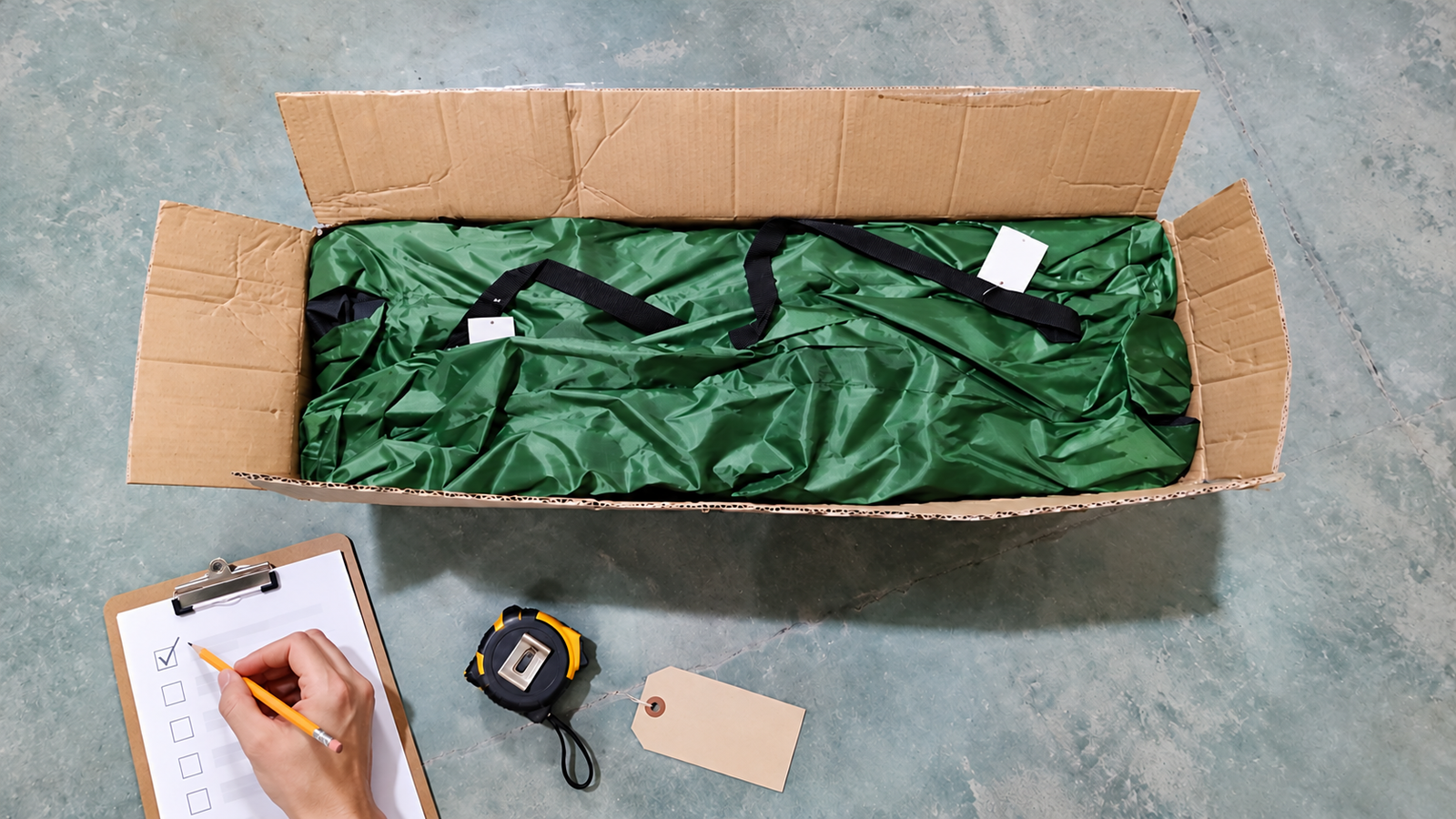
Decide early which details are checked at the start of production, while production is underway and before shipment, and who has authority to approve a change or release the goods. Independent quality-control programs commonly separate these stages because different problems become visible at different times.
- Details checked at the start of production
- Details checked while production is underway
- Details checked before shipment
- Person with authority to approve a change or release the goods
The useful shift.
The buyer in this case did one important thing right: a pre-production sample was approved and one unit was retained. But the sealed chair was not enough to prevent the dispute because critical details had not been converted into a shared acceptance standard.
A sample should not be only something everyone remembers. It should become the physical reference behind a written, inspectable agreement. After approving a folding camping chair sample, the next useful buyer question is not only “Can you make this chair?” It is “Which exact details will prove that the bulk order is still this chair?”
Case note: the opening case is an anonymized buyer account shared for educational purposes. It illustrates a production-control gap; it is not an independently audited finding or an allegation about a named supplier.
Evidence note: this article does not claim that all suppliers substitute materials, that an inspection pass guarantees every unit, or that PATU holds third-party certification for a specific product. Specifications, test methods, inspection plans and market requirements depend on the SKU, supplier, destination and order risk.
Keep reading
Related Resources
Need a clearer comparison for your buying program?
Share the product, use case or quotation detail you are working with.