
A Carton Can Fit the Chair—and Still Be the Wrong Packaging Decision
Before approving folding camping chair packaging, confirm carton configuration, retail requirements, distribution route and verification method.
A carton that fits is only the beginning
A folding camping chair fits inside the carton. At first glance, that may seem like the packaging decision is complete. But it is only the beginning.
A chair can fit the carton and still arrive with the wrong labels, the wrong retail presentation, an unsuitable packing configuration, or packaging that was never considered for the route it will actually travel.
The useful question is not simply “Does the chair fit in the box?” It is “Does the complete packaging configuration fit the way this order will be sold, handled and transported?”
Why carton size alone is not enough
Carton length, width, height and units per carton affect loading, storage, freight and handling. But the master carton is only one part of the packaging decision.
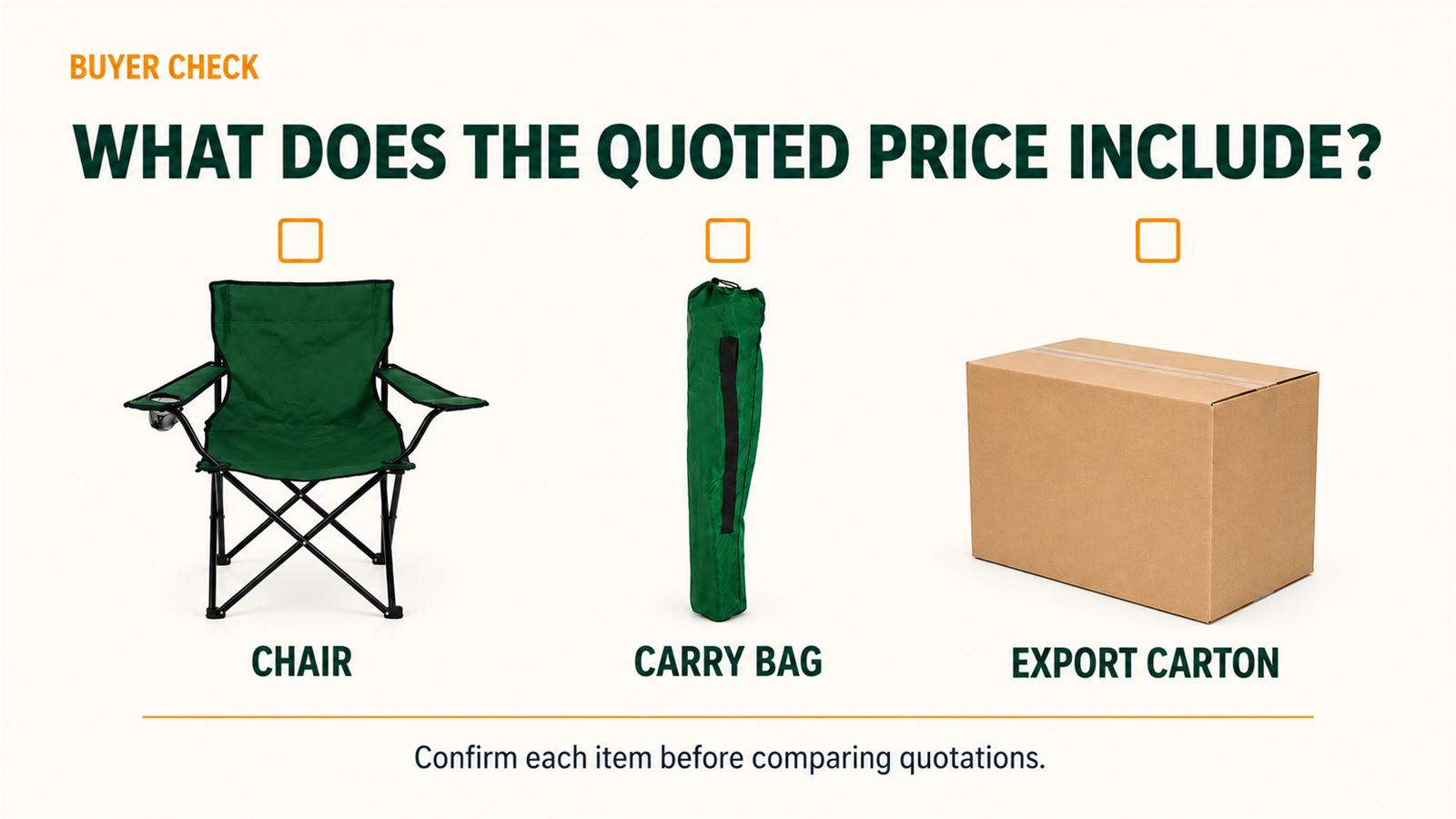
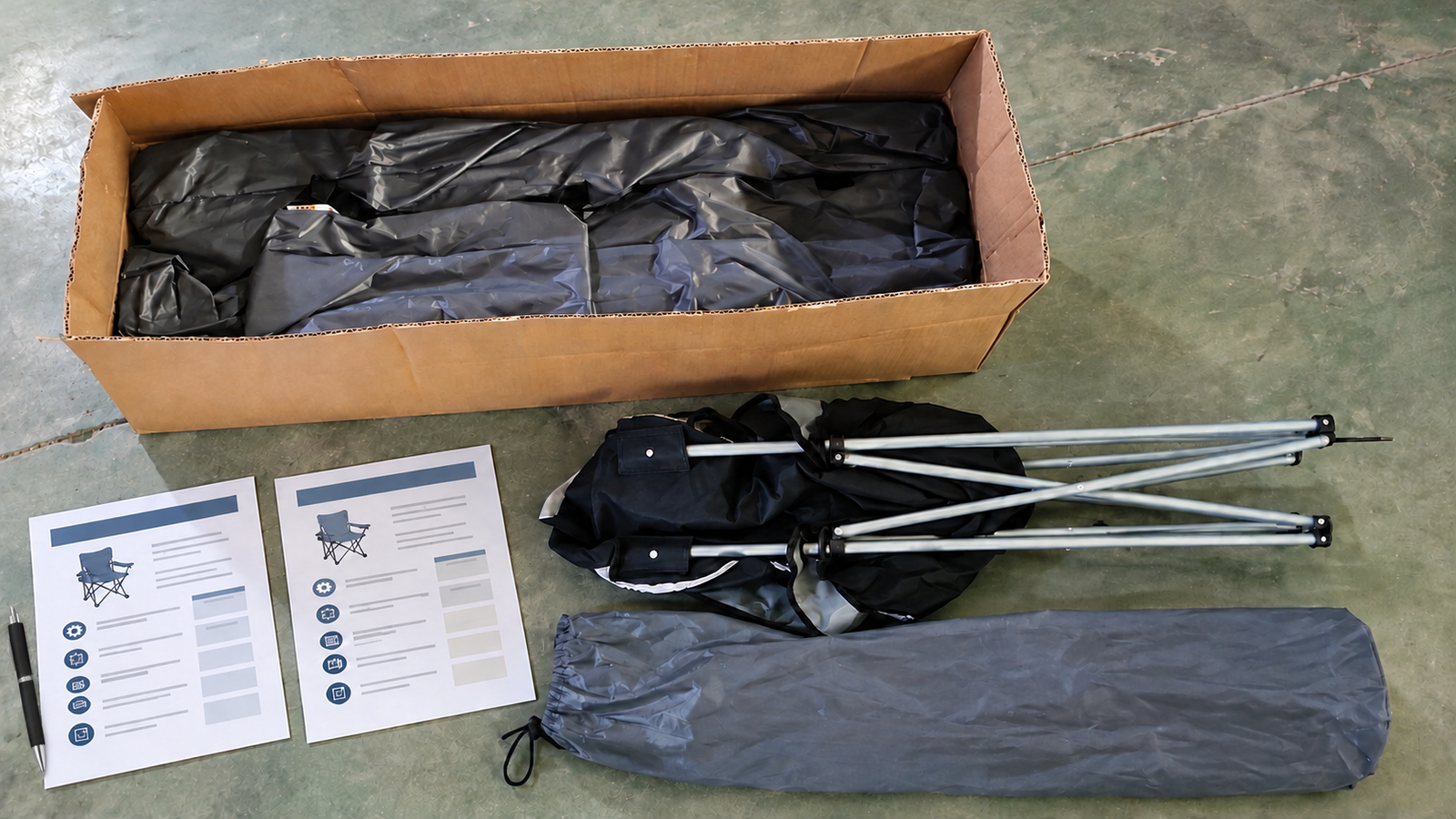
Depending on the order, the complete package may also include a carry bag, hangtag, barcode or warning label, manual, retail packaging, internal protection and outer-carton marks. A configuration suitable for one distribution route may not be appropriate for another.
| Point to clarify | Why it helps |
|---|---|
| Finished package | Identifies the chair, accessories, labels and protection in scope. |
| Carton configuration | Makes quantity, dimensions, weight, arrangement and marks visible. |
| Buyer and route requirements | Connects packaging to the sales channel and distribution journey. |
| Verification and evidence | Clarifies the agreed records, checks and any required testing. |
1. Confirm what the finished package includes
Before approving a carton, define what is being approved. A supplier may quote a chair with a carry bag while a buyer assumes that the quotation also includes a hangtag, barcode, retail-ready presentation and approved carton marks. Those are not necessarily the same thing. The best time to identify the difference is before packaging production begins.
- Whether a carry bag is included, and whether it is part of the retail presentation or a transport accessory.
- Whether hangtags, labels, barcodes, warnings or manuals are required.
- Whether internal protection is needed.
- Whether the end customer receives a retail pack, a master carton, or both.
2. Make the carton configuration visible
A carton should not be approved from one dimension alone. The following details help buyers assess warehouse handling, store replenishment and whether the configuration matches the order plan—not just freight volume. The goal is to make the agreed configuration visible enough to check.
- Units per master carton and the arrangement of the chairs inside.
- Carton dimensions and the measurement basis.
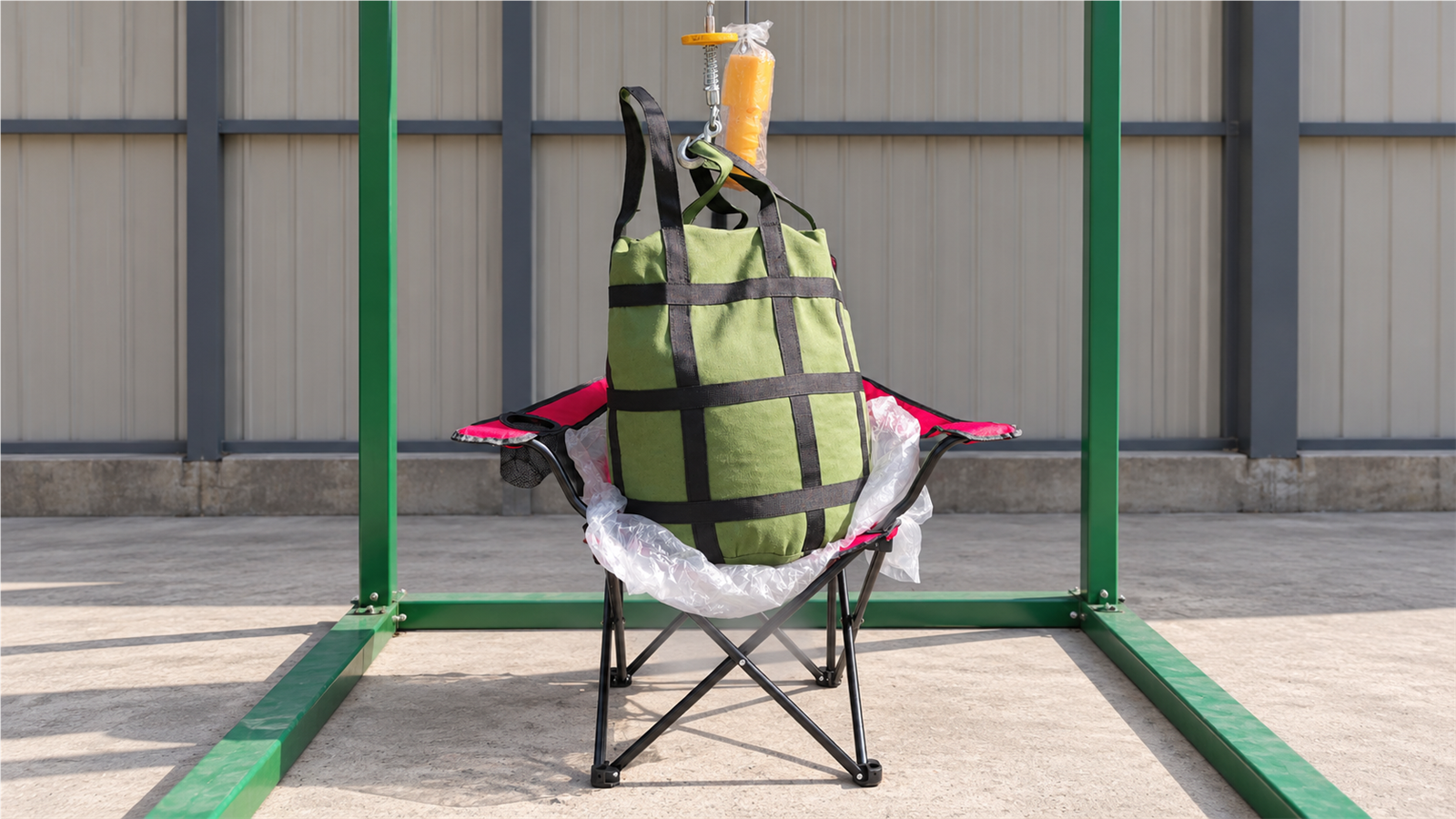
- Net and gross weight.
- Required carton marks and any agreed handling or orientation marks.
3. Treat labels and retail requirements as part of the package
A product can be physically protected and still be unready for the buyer’s sales program. Depending on the order and destination, the package may need an agreed barcode and placement, buyer-approved artwork, a hangtag, warning label, manual, language information or warehouse marks.
Requirements vary by product, market, buyer and sales channel. Some may be legal requirements rather than optional program preferences. Confirm applicable requirements for the actual destination and product; do not assume that a photo or earlier sample establishes compliance.
4. Define the journey before judging the package
There is no single correct carton for every route. The route should be known before the packaging decision is treated as final.
ISO 4180:2019 provides general rules for compiling performance-test schedules for complete, filled transport packages. ASTM D4169-23e1 provides a laboratory framework for evaluating shipping units against anticipated distribution conditions. The applicable method, version and acceptance criteria depend on the actual project; referring to a standard does not mean a particular product or package has been tested or certified to it.
| Intended route | Packaging question a buyer should ask |
|---|---|
| Bulk or container shipment | Is the master-carton configuration practical for loading, unloading and warehouse storage? |
| Warehouse and retail replenishment | Are the carton marks, barcodes, quantities and retail presentation aligned with the buyer’s process? |
| Project delivery | Does the configuration support the required handling, identification and delivery sequence? |
| Individual parcel or e-commerce delivery | Has the package been assessed for parcel-handling conditions and applicable requirements? |
5. Agree on how packaging will be verified
Not every order needs the same verification method. Depending on the product, route, buyer agreement and applicable requirements, a review may include an approved packaging specification, a sample carton, packing photos, measurements, weight records and agreed inspection points.
These checks are not a substitute for tests or other requirements that apply to the order. A retailer, marketplace, project customer, carrier or destination may require a specific test, label format or delivery standard. Confirm the method, conditions and acceptance criteria with the relevant parties.
ISTA test procedures include non-simulation integrity, partial simulation and general simulation approaches, as well as other purpose-specific procedures. Their different scopes illustrate why “tested packaging” is not one universal claim.
A practical buyer check before packaging approval
Use these questions to agree on the package and the evidence needed for the specific order.
- What is included? Confirm the chair, carry bag, labels, manual, retail pack, internal protection and outer carton, as applicable.
- What is the carton configuration? Confirm units per carton, dimensions, weights, internal arrangement, marks and handling requirements.
- What must the package communicate? Check applicable barcode, artwork, warning, language, retail and warehouse requirements.
- What journey will it take? Identify the bulk, retail, project or parcel route and any relevant handling requirements.
- What evidence will support approval? Agree on the sample, records, inspection points and any required route-appropriate testing.
The carton is part of the order—not an afterthought
A carton that fits a folding camping chair may be a suitable starting point, but fit alone does not settle the complete packaging decision. Defining the package, route, buyer-facing requirements and verification method makes important assumptions visible while there is still time to address them.
This article provides general buyer guidance. Confirm product-specific, destination-market and buyer requirements with the relevant parties.
Keep reading
Related Resources
Need a clearer comparison for your buying program?
Share the product, use case or quotation detail you are working with.