
Why Unit Price Alone Cannot Compare Folding Camping Chair Quotations
Compare folding camping chair quotations by product, quantity, delivery terms, included scope, payment timing and relevant logistics—not unit price alone.
Start with the same order basis
Two folding camping chair quotations can show different unit prices without describing the same commercial offer. First confirm that the products themselves match: model, dimensions, frame, fabric, accessories and packing. Then compare the basis behind each price. Quantity, delivery terms, included items, payment conditions and timing can all change what a buyer is actually being asked to purchase.
A lower number may still be the better offer. The point is to understand what it includes before treating the difference as a saving. Before comparing prices, put the assumptions side by side. At minimum, check:
| Comparison point | What to confirm |
|---|---|
| Quantity | Total order, model and colour mix, MOQ and quoted price tier |
| Delivery term | The Incoterms® rule, version and exact named place or port |
| Included scope | Chair configuration, carry bag, labels, manuals, retail packaging and cartons |
| Other charges | Sample, artwork, tooling, testing or inspection charges—and what is excluded |
| Payment and timing | Currency, payment milestones, quotation validity and the event that starts lead time |
| Logistics, when relevant | Units per carton, carton dimensions, gross weight and loading assumptions |
1. Match the quantity commitment
A quotation may depend on total quantity, quantity per model or colour, MOQ, or a stated price tier. A lower unit price at a higher quantity is not automatically a better fit if it creates a larger first-order or inventory commitment.
Ask each supplier to state the quantity used for the price, including any model and colour mix assumptions. If one quotation is based on a repeat order and the other on an initial order, make that difference visible too.
The useful question is not only “Which unit price is lower?” It is “What quantity commitment does each price require?”
| Point to clarify | Why it helps |
|---|---|
| Product and specification | Confirms both prices describe the same model, configuration and approved requirements. |
| Quantity and included scope | Makes price tiers, accessories, packaging and separate charges visible. |
| Delivery and payment basis | Aligns the named delivery point, payment milestones and lead-time start event. |
| Relevant logistics assumptions | Keeps carton and freight details comparable when they affect the decision. |
2. Specify the delivery term and named place
The quotation should identify the agreed Incoterms® rule and named place—for example, the relevant port or destination—not just “FOB” or “DDP.” A rule without its named place leaves an important part of the delivery basis unclear.
Incoterms® rules allocate certain delivery obligations, costs and risks between seller and buyer. They do not define the product specification, the price or payment method, transfer of ownership, or every term of the sale contract. Those matters should be agreed separately.
For example, EXW and FOB describe delivery at different points and allocate responsibilities differently; they are not like-for-like delivery offers. The suitable rule depends on the shipment and the parties’ arrangements. Confirm the rule, version, named place and which costs or tasks remain outside the quoted price. Do not assume one term is always preferable.
3. Make the included scope visible
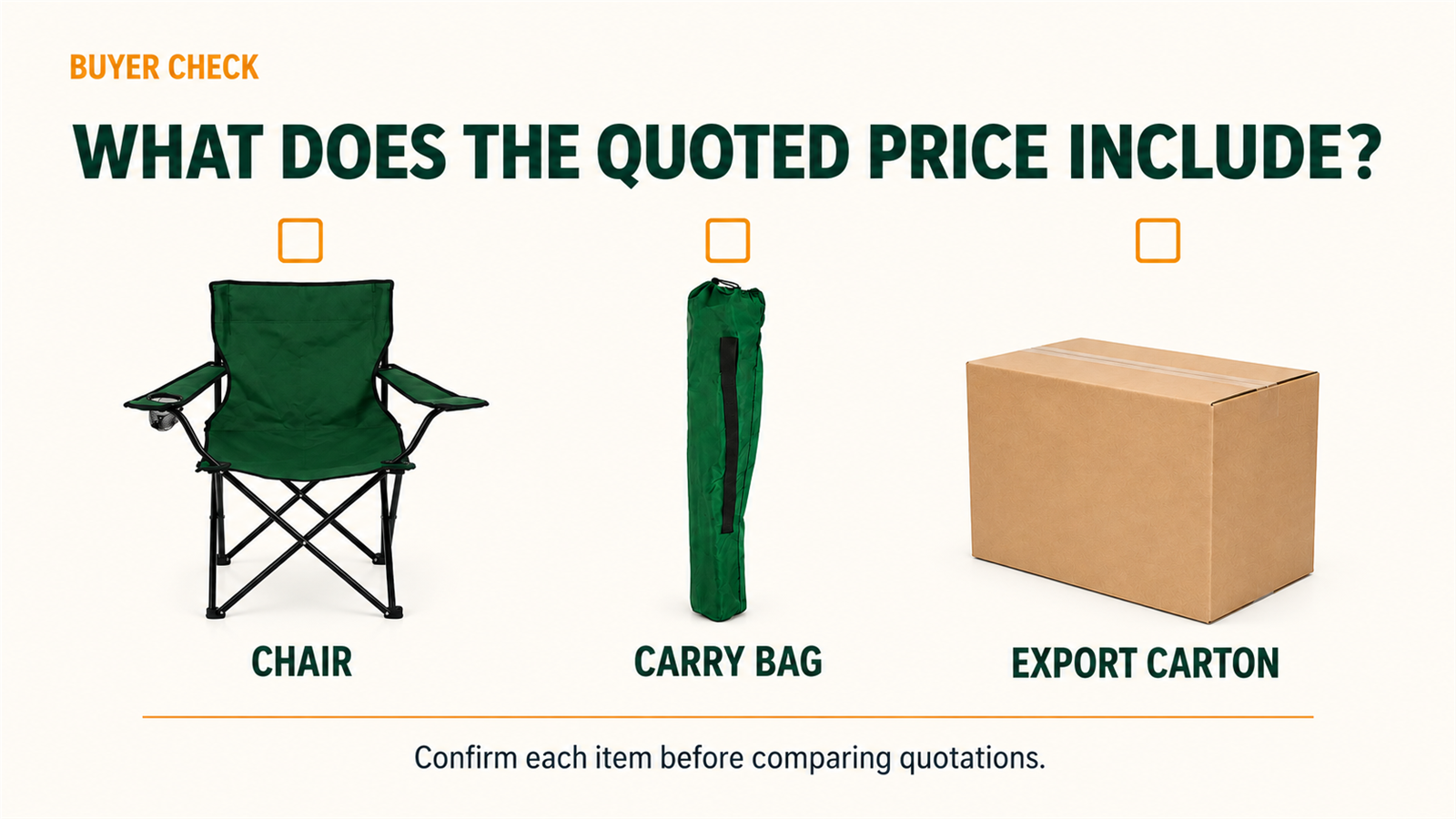
A camping-chair order may include more than the chair. One quotation may include a carry bag, hangtag, barcode, manual, retail packaging or master carton; another may price one or more of these separately—or leave them unspecified.
Create a short included/excluded list for both offers. An unlisted item is not proof that it is absent or included. Record it as “not stated” and ask for clarification before using the price difference to make a decision.
- Chair model, selected options and accessories
- Labels, barcodes, manuals and artwork
- Individual packing and export cartons
- Sample, artwork, tooling, testing or inspection charges
- Exclusions or items still awaiting confirmation
4. Compare payment and timing assumptions
Prices also come with conditions. Record the currency, payment milestones and quotation-validity period. For lead time, confirm both the quoted duration and the event from which it runs: for example, receipt of deposit, sample approval, artwork approval or final specification confirmation.
“Thirty days” can describe different schedules if the starting event is not the same. Payment timing can also affect cash commitment and planning, even when the unit prices are identical. These conditions do not automatically make an offer good or bad; they make its commercial basis clearer.
5. Add logistics data when it affects the decision
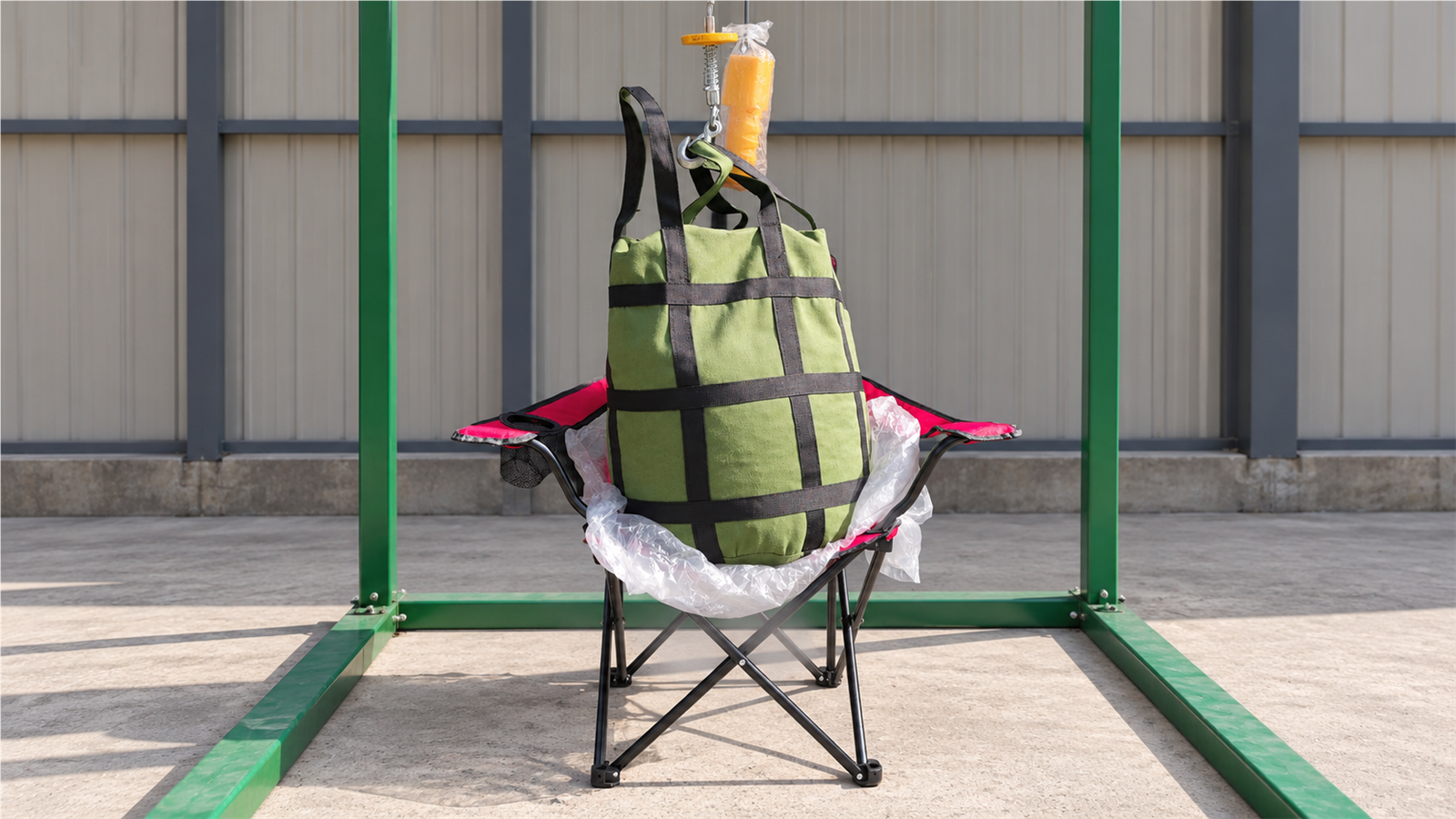
Carton dimensions, units per carton, product and gross carton weight, pallet requirements and loading assumptions matter when freight, storage, handling or delivery to a retail network is part of the comparison. They need not dominate an early shortlist when logistics are not yet being evaluated.
When they do matter, ask both suppliers for the same data on the same basis. Product weight should not be compared with gross carton weight, and a loading estimate should identify its assumptions. Use the figures to inform the relevant freight or handling estimate; do not treat them as a complete landed-cost calculation on their own.
When one quotation is lower
Before asking a supplier to match another price, identify what differs between the offers. Check the quantity tier, product configuration, included items, delivery term and named place, payment and timing, and—if relevant—packing and logistics assumptions.
Then ask both suppliers to quote the same confirmed configuration and commercial basis. If the price gap remains, it is easier to evaluate. If it changes, the earlier difference may have reflected different assumptions rather than a like-for-like saving.
Sometimes the lower offer will remain the right choice. This comparison does not determine which supplier to select; it helps a buyer understand what each quotation covers before deciding.
A practical quotation check
Before comparing folding camping chair unit prices, confirm:
- The same model and approved specification are being quoted.
- The quantity, model mix, colour mix and price tier are clear.
- The Incoterms® rule, version and named place match—or the difference is accounted for.
- Included items, separate charges and exclusions are listed.
- Currency, payment milestones, validity and lead-time start point are stated.
- Packing and logistics data use comparable definitions where they affect the decision.
- Unit price matters, but it is a starting point—not the whole offer. A more useful question is: Which quotation supplies the product and scope I need, on the delivery and payment basis I can accept?
References and limits
This article is general buyer guidance, not legal, customs, tax or freight advice. Confirm the terms and costs for the specific product, destination and sales contract with the relevant parties or qualified advisers.
Keep reading
Related Resources

Need a clearer comparison for your buying program?
Share the product, use case or quotation detail you are working with.