
“600D Oxford” Is Not a Full Fabric Specification
“600D Oxford” is not a complete camping chair fabric specification. Learn what buyers should confirm about composition, coating, performance, and verification.
A buyer situation: the same words, three different material decisions
Three folding camping chair suppliers may all write the same words in their quotations: “600D Oxford + waterproof.” The prices may still be different. That does not automatically mean one supplier is charging too much or another is using the wrong material. It may mean the buyer is not yet comparing complete fabric specifications.
“600D Oxford” can be a useful starting description. It does not finish the buyer’s material question. In an anonymized sourcing situation, three suppliers described different coating configurations—PU, PE and PVC—using the same broad wording. That did not establish that one coating would perform better than another. It showed that the phrase had not defined the material well enough for a useful comparison.
The more useful questions became: What is the complete material specification for each option? What performance does this chair actually need? Is the requirement water repellency, resistance to water penetration, easy cleaning, appearance, flexibility, or something else? What sample, written specification or test method will confirm the agreed requirement? The samples had exposed an incomplete requirement before bulk production began.
What “600D” tells a buyer—and what it does not
In textile terminology, denier is related to yarn linear density. ISO 2060 covers the determination of yarn linear density by mass per unit length. That makes “600D” relevant information, but it does not by itself define the fiber composition, weave or other construction details, fabric mass per area such as GSM, coating or finish, treated side, water-related performance, colorfastness, abrasion, UV performance, seam and final-chair construction, or a verified performance result.
Two materials may both be described as “600D Oxford” while still having different material configurations. The words are not useless. They are simply incomplete when a buyer needs to compare materials closely.
| Point to clarify | Why it helps |
|---|---|
| Composition | Makes the quoted fiber material and chair components clear. |
| Construction and finish | Separates yarn description, construction, fabric mass and coating or finish. |
| Required performance | Connects the material decision to the actual chair use and buyer requirement. |
| Verification method | Defines the swatch, specification, sample, inspection point or test evidence needed. |
Why “waterproof” did not settle the question
“Waterproof” can sound like a complete answer. For a buyer, it is usually the beginning of another question: What exact water-related performance is required, and how will it be verified?
AATCC TM127 measures a fabric’s resistance to water penetration under hydrostatic pressure. The method notes that results depend on fiber and yarn repellency as well as fabric construction, and cautions that hydrostatic-pressure results may not be the same as results from rain or water-spray methods. AATCC TM22, by comparison, is a spray test used to assess resistance to wetting and the effectiveness of water-repellent finishes. These are different questions.
This does not mean every folding camping chair order needs both tests. It means a buyer should avoid treating a general “waterproof” description as a complete material requirement without first defining what matters for the intended product and use.
1. Confirm the composition
The buyer should ask what material is being quoted. Is the fabric polyester, nylon or another stated composition? Is the composition included in the written material specification? Is the same material used for the seat, back, carry bag and any pocket panels?
The answer may be straightforward, but it should be written down before the buyer assumes that two similar descriptions represent the same material.
2. Ask what “600D Oxford” means in this quotation
A supplier may use “600D Oxford” as a familiar commercial description. When the material comparison matters, the buyer should ask for the details needed for that program.
Depending on the order, this may include relevant weave or construction information, ripstop information if applicable, fabric mass per area such as GSM, the material used in different chair panels, and any agreed tolerances or material-reference samples. The goal is not to request every possible textile parameter; it is to identify which information is necessary to compare the options being offered.
3. Make the coating or finish visible
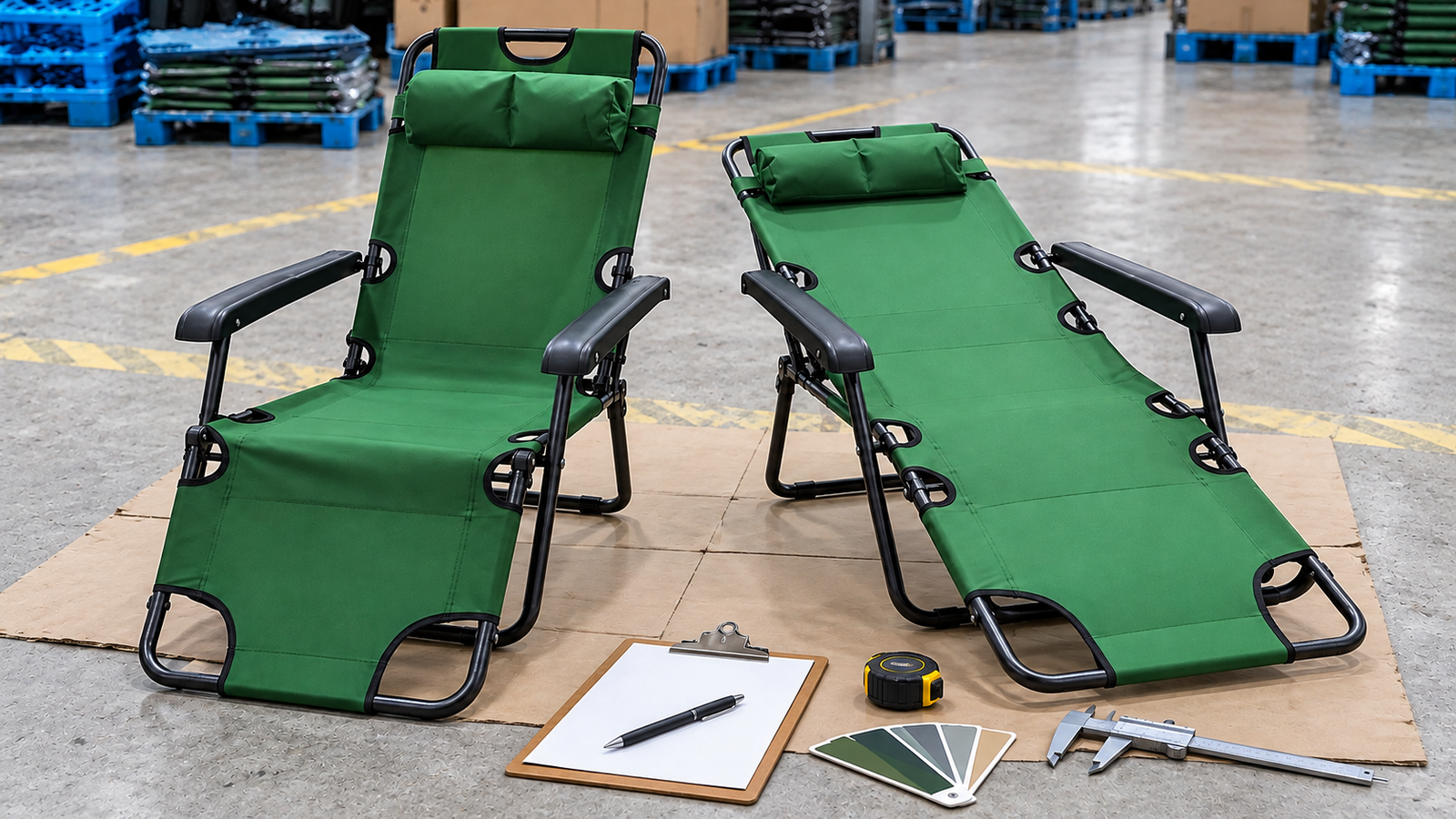
In the anonymized case, the samples led to a useful discovery: the words “600D Oxford + waterproof” were hiding different coating configurations. That did not make one supplier automatically right. It made the comparison more specific.
A buyer may need to ask whether a coating or finish is included, what type is stated, which side is treated if that matters to the product requirement, whether the coating or finish is part of an agreed material specification, and whether a water-related claim is required for the finished product.
Current catalogues show that 600D Oxford fabric can be described with different coating language, including PU, PE or PVC. That is an observation about stated material configurations, not a ranking of those configurations.
4. Define the performance the chair actually needs
A buyer cannot decide which fabric configuration is suitable until the intended requirement is clear. For a folding camping chair, the relevant question may be whether the buyer mainly needs an agreed appearance and ordinary outdoor use, easy cleaning, a particular water-related claim, a defined color, abrasion, strength or UV criterion, or suitability for a specific sales channel or use environment.
Not every order needs every criterion. The mistake is to use a broad material phrase as a substitute for deciding which criteria matter.
5. Agree on how the requirement will be verified
Once the buyer has defined the requirement, the next question is evidence. Depending on the order, an appropriate approach may include a signed-off material swatch, a written material specification, an approved sample chair, a defined inspection point during production, or a named test method and acceptance criterion where the buyer needs a verified performance result.
A material sample can support review of color, feel and supplied material construction. It does not automatically prove every performance claim. Likewise, a test result is useful only when the buyer knows what was tested, under which method, and what result is required.
The right question is not “Which coating is best?”
PU, PE and PVC are material details. They should be discussed in relation to the actual product requirement, not treated as universal winners or losers.
The buyer in this case did not need to identify the one globally “best” coating. The buyer needed to decide: What does this chair need to do, and what evidence will confirm that the agreed material can do it? That is a much more useful sourcing question.
A practical material check before comparing prices
Before treating two “600D Oxford” fabric offers as comparable, make the material decision visible.
| Buyer check | What to ask |
|---|---|
| Composition | What fiber composition is being quoted? |
| Construction and mass information | What does “600D” describe here, and is relevant construction or GSM information available? |
| Coating or finish | Is a coating or finish specified? What is it, and does the treated side matter? |
| Required performance | What does the buyer actually need: appearance, cleanability, water-related performance, color, abrasion, or another criterion? |
| Verification | Will the requirement be confirmed by a swatch, written specification, sample chair, inspection point, or defined test? |
A material description is the start of the conversation
“600D Oxford” may be the right material description for a folding camping chair quotation. But it should not be the only material description.
The buyer does not need more technical language for its own sake. The buyer needs enough clarity to know whether two offers describe the same material decision—and enough evidence to confirm the requirement before bulk production begins.
Keep reading
Related Resources
Need a clearer comparison for your buying program?
Share the product, use case or quotation detail you are working with.